By: Todd Irwin
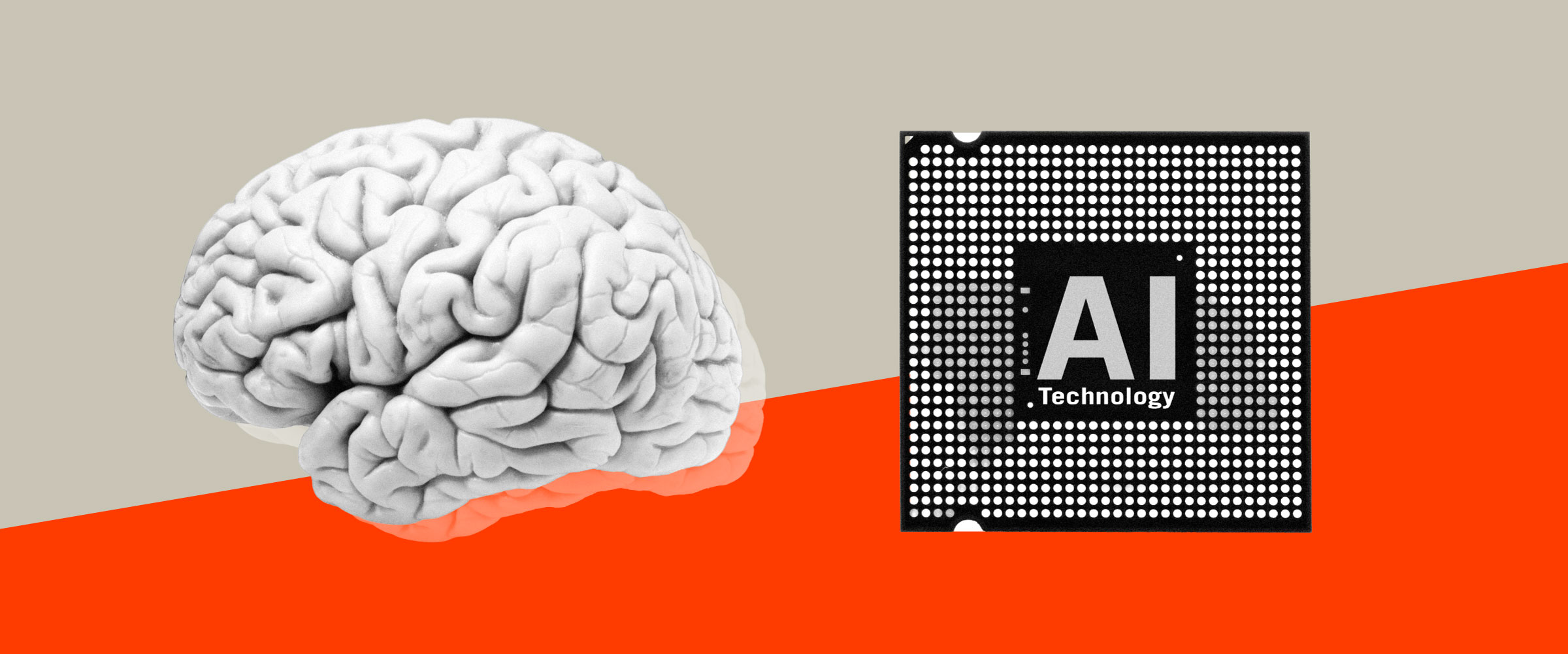
For a century, one judge decided which brand a customer chose. The human mind. Then Google sat beside it, sorting the options. Today a new machine takes that seat, and it decides differently. You’d expect it to disagree with the mind. It doesn’t, and that quietly rewrites what brand strategy is for.
Ask a person for the best brand in a category. Then ask an AI the same question. You get the same answer. That should stop you. A human mind and a machine share almost nothing. One runs on memory, emotion, and a lifetime of noise. The other runs on math. Build two systems that different, point them at the same question, and they should disagree. They don’t. They keep returning the same brand. This is not a coincidence. The brain and the machine are running the same rule. And once you see that rule, you see what brand strategy was always supposed to be.
The one rule
Here’s the rule. The clearest solution to the most important problem wins, and it pushes everything else out of view. The brain does it one way. The machine does it another. The output is identical. The brand that owns the problem becomes the answer, and the alternatives go quiet. That is the entire game now. Not attention. Not difference. Resolution. Let me show you how each system runs it.
The clearest solution to the most important problem wins, and it pushes everything else out of view.
How the brain chooses
Start with the brain, because a theory from cognitive psychology explains the whole thing. It’s called Interference Theory. Your memory does not file competing information in neat rows. The pieces fight. When two memories compete to surface at the same moment, they don’t both arrive. The stronger, clearer, more relevant one comes forward, and as it does, it suppresses the others. It doesn’t just outrank them. It pushes them down until they’re hard to reach.
You’ve lived this. Think of a category where one brand solved your problem cleanly. You can name that brand in a heartbeat. Now try to name its three closest competitors. You stall. That stall is Interference Theory at work. The clear solution didn’t only win your recall. It dimmed everything near it until the alternatives nearly vanished. This is why solving beats differentiating. A brand that solves your most important problem plants a clear, strong signal in memory. That signal interferes with every weaker one around it. The competitors don’t lose because they’re worse. They lose because they can’t get back into the room.
How the machine chooses
Now the machine, which runs the same play on different hardware. AI search does not hand you ten links to sort. Faced with a crowded market of similar claims, it narrows. It weighs the signals, filters the murk, and surfaces the most credible solution to the problem you asked about. Then it collapses the rest. One answer comes forward. The alternatives drop away.
Read that against the brain and the symmetry is exact. In the mind, the clearest solution suppresses competing memories. In the model, the clearest solution suppresses competing answers. Two substrates. One mechanism. The brand that solves the problem most clearly wins recall in the human and ranking in the machine, at the same time, for the same reason.
Apple proves it
Apple proves it in the open. Apple does not win on difference. It wins on solving. It removes friction. It makes privacy the answer to a worry you couldn’t quite name. Ask a person for the simplest, safest phone, and they say Apple without thinking. Ask an AI, and it says Apple too. Same name, because Apple solves the hero pain point so completely that the competitors go dim in your memory and in the model at once. Apple is the king of problem solving. That is exactly why the brain and the machine both reach for it first.
Two systems, built apart
So how did a creative discipline and a retrieval engine end up running the same rule? They were never coordinated. They were built in different rooms, by different people, for different reasons. AI search came out of computer science. Its only job is retrieval. Read the signals, weigh them, return the answer most likely to resolve the question. No feelings. No theatre. Brand strategy came out of advertising, and advertising told it a story. Be different. Stand out. Own a feeling. From Trout and Ries to Sinek, that story hardened into one word. Differentiation. The industry came to believe being different was the job.
It was never the job. Strip the story away and brand strategy has always had one true purpose. Make a brand the obvious solution to the customer’s most important problem. The brain rewarded that long before anybody built a machine. Differentiation was the detour the industry mistook for the destination. So when the machine arrived and rewarded clear problem solving, it didn’t invent a new rule. It enforced the old one. The one the brain was already running. The one brand strategy was always supposed to serve.
So when the machine arrived and rewarded clear problem solving, it didn’t invent a new rule. It enforced the old one.
Why brand strategy drifted
Here’s the thing most marketers miss. For a century, the discipline was at war with its own medium. The old medium never paid for solving. It paid for spend. Buy the airtime. Buy the frequency. Win the keyword auction. Stack the backlinks. Attention went to the biggest budget, and attention got mistaken for advantage. So the work drifted toward what the channel rewarded. It learned to interrupt. It learned to manufacture difference, because difference was the cheap way to get noticed in a channel that paid for noise. The customer wanted relief. The channel wanted reach. Strategy split the difference and lost the plot.
That war is over. The medium switched sides. AI search pays for the one thing the brain always rewarded and the old channel never did. The clearest solution to the most important problem.
Built for the brain, matched by the machine
This is why the De-Positioning methodology sits exactly on the seam. It was not built for AI. It was built for the brain. It runs on cognitive science. Interference Theory. The Engel-Blackwell-Miniard model of how people actually decide. It finds the hero pain point, solves it with absolute clarity, and lets competitors fade from the consideration set as a byproduct. Competitive advantage is never the lead. It’s the result of owning the problem.
None of that was designed with a language model in mind. It optimized for how human decisions get made, full stop. Then AI search arrived and worked the same way. The methodology built for the mind matched the machine without changing a word. Not a strategy retrofitted to a new channel. A strategy that already lived where the channel was heading.
What the machine is actually reading
We used to guess at what AI search wanted. We don’t have to anymore. The mechanics are documented. And when you read them, the same rule stares back. A machine can’t read your intentions. It can’t feel your brand. It reads signals. The signals it rewards come down to four things, and every one of them is the fingerprint of a solved problem.
-
- It rewards fact-density. Hard numbers. Verifiable claims. Explicit definitions. No fluff. And fluff is what differentiation sounds like. Bold. Innovative. Visionary. None of it is extractable, because none of it solves anything. A solved problem talks in facts. We cut this by that much. We removed this friction. The machine quotes facts and ignores adjectives, because facts are proof and adjectives are noise.
- It rewards answer-first structure. Lead with the answer to a real question in the first line. But look at what those questions are. They’re pain points. Nobody asks a machine how unique you are. They ask how to solve something. Answer-first is pain point solutioning with a header tag. You lead with the problem and resolve it on the spot, the same move that wins the human.
- It rewards off-site consensus. The machine trusts you when independent sources agree on what you are. Reddit. Reviews. Third parties. And consensus is what owning a pain point looks like at scale. When you solve one problem clearly, everybody describes you the same way, because there’s only one thing to say. When you chase difference, the signal fractures. Every channel tells a slightly different story, and the machine reads the disagreement as doubt. Solving consolidates the signal. Difference scatters it.
- It rewards recency. Current proof, freshly dated. Because a live problem demands a live solution. A stale claim signals a brand that stopped paying attention to the customer’s pain. Recency is proof you’re still solving.
Four signals. One source. They are not four tactics to bolt on. They are four ways of measuring whether you solve a problem clearly enough for a machine to trust you as the answer. You can’t fake the fingerprint. Fact-density with nothing solved is just data. Answer-first with no answer to own is just formatting. The checklist everybody is scrambling to implement is downstream of one question. Do you own a hero pain point.
Run the audit. It’s a positioning test.
You can see this for yourself in an afternoon. Ask the machines the questions your customers ask. Not your name. Their problem. “If a company needs to solve this, which vendors should they look at.” That’s the category query. That’s the hero pain point moment, live, inside the model. Watch what comes back. If your brand is the answer, you own the problem. If your brand is absent, you don’t.
That absence is the part people misread. They treat it as a technical failure. A crawler setting. A schema gap. Fix the plumbing and you’ll show up. Sometimes that’s true at the margins. Mostly the machine is telling you something harder. It doesn’t see you as the solution to a problem, because you haven’t made yourself one. No amount of structured data fixes a brand that hasn’t decided what it solves.
An AI search audit looks like an SEO exercise. It isn’t. It’s a positioning test with a machine as the judge. And the machine is honest. It has no relationship with you. No history. No goodwill. It reads your signals cold and reports exactly what they say. If they say you solve a problem better than anybody, it makes you the answer. If they say nothing clearly, it makes someone else the answer. The audit doesn’t grade your marketing. It grades your clarity.
An AI search audit looks like an SEO exercise. It isn’t. It’s a positioning test with a machine as the judge.
Win the decision twice
For a hundred years, good strategy and the rewards of the medium pulled against each other. You had to choose. Do right by the customer, or do what the channel paid for. That choice is gone. The brain and the machine now reward the same move. Solve the most important problem with clarity, and you win recall in the human and ranking in the machine in a single stroke. You win the decision twice.
This is why it matters more than any tactic. Tactics chase the algorithm of the month. This is structural. Brand strategy is no longer about being seen. It’s about being the resolution. The two systems that decide who gets chosen, the mind and the model, now agree on what gets chosen. And they reward the oldest truth in the discipline, the one differentiation kept burying.
The age of attention is closing. The age of resolution has begun. Solve the problem. Own the answer. The brain and the machine will do the rest.
Talk to us.
If your brand is invisible in AI search, the cause is almost never technical. It’s strategic. The brand never owned a Hero Pain Point clearly enough to win the decision. We’re a senior-led brand strategy firm built around one methodology: De-Positioning. We help CEOs, CMOs, and ambitious founders clarify the problem they own and build brands that win the decision. Whether the buyer is a human or an AI. If that sounds like the firm you’ve been looking for, schedule a call.
FAQs
Why do the human brain and AI search choose the same brand?
Because both run the same rule: the clearest solution to the most important problem wins, and it suppresses every weaker option. The brain does this through memory. The machine does it through retrieval. In both systems, the brand that owns a problem and solves it with clarity becomes the answer, and the alternatives go quiet. Same mechanism, two substrates.
Why doesn’t differentiation work in AI search?
Because AI search rewards verifiable problem solving, not subjective difference. A machine reads signals, not intentions. Claims like bold, innovative, or visionary are not extractable, because they don’t solve anything. The brand that states a clear problem and proves it solves that problem better than the alternatives is the one the model surfaces and cites. Fact-density wins. Adjectives get ignored.
What is Interference Theory and why does it matter for brand strategy?
Interference Theory is a principle from cognitive psychology: when two memories compete to surface, the stronger, clearer, more relevant one wins and pushes the others out of reach. It matters because it explains why solving beats differentiating. A brand that clearly solves your most important problem plants a strong signal in memory that suppresses competing brands. This is the mechanism the De-Positioning methodology is built on.
What does AI search actually reward in brand content?
AI search rewards four things: high fact-density, answer-first structure, off-site consensus, and recency. Each one is the fingerprint of a solved problem. Fact-density is proof. Answer-first structure is pain point solutioning with a header tag. Off-site consensus is what owning a problem looks like at scale. Recency is proof you’re still solving the live problem. You can’t fake the fingerprint. All four signals are downstream of one question: do you own a hero pain point.
What is an AI search audit and what does it really measure?
An AI search audit asks the machines the same questions your customers ask, then grades whether your brand shows up as the answer. It looks like an SEO exercise. It isn’t. It’s a positioning test with a machine as the judge. If your brand is absent from category queries, the issue is usually not a technical setting. It’s that you don’t own a problem clearly enough to be the solution. The audit doesn’t grade your marketing. It grades your clarity.