By: Todd Irwin
Everyone is reading Apple’s AI strategy wrong. The prevailing story is this: Apple is behind. OpenAI, Google, Anthropic, and a wave of new entrants have raced ahead while Apple is still trying to make Siri relevant. They haven’t led the early phase of generative AI. They haven’t dominated headlines. They haven’t produced a breakout model that defines the category.
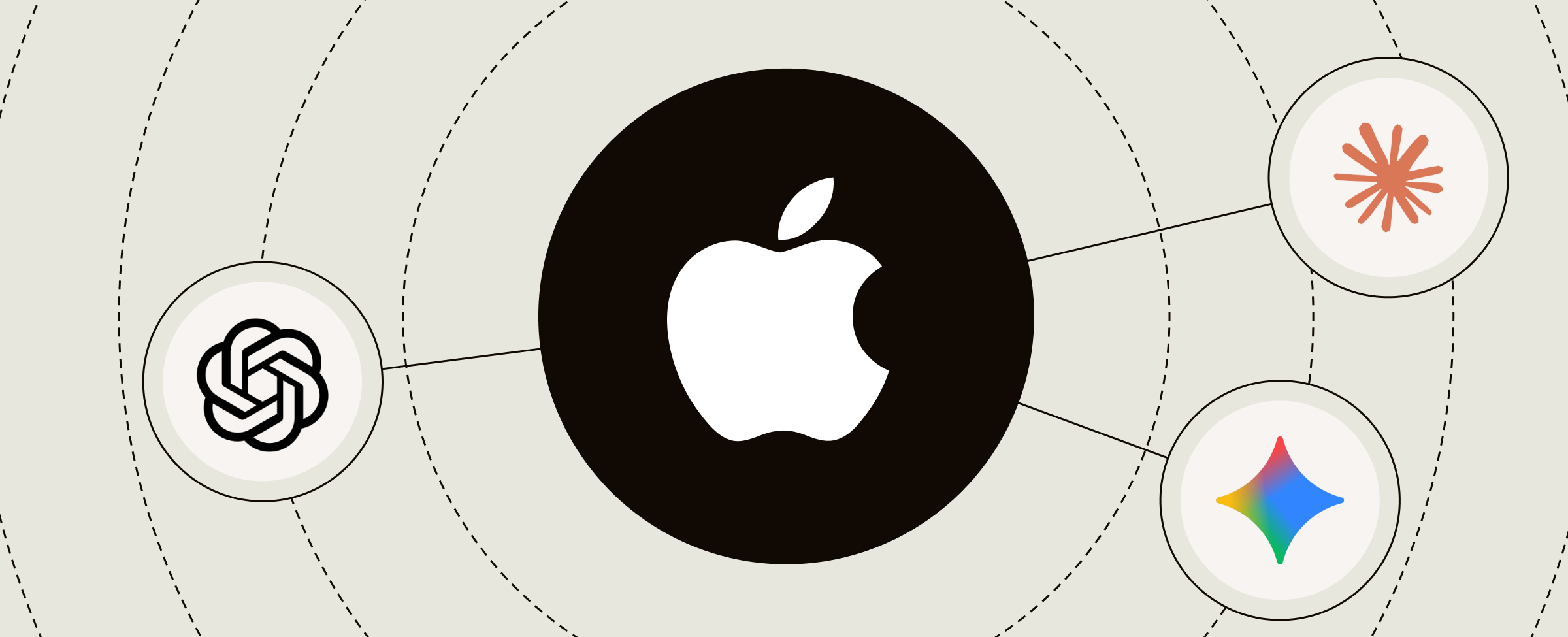
So the consensus calls them late. It’s not late. It’s a choice. Recent reporting from Reuters, citing Bloomberg, suggests Apple is planning to open Siri to third-party AI services beyond its current ChatGPT partnership. Users would route queries through Siri to different AI providers. Siri becomes the gateway, not the destination. At first glance, that looks like a concession. It isn’t. It’s a platform move. And if you understand what platform moves actually do, you understand why Apple may be the most dangerous company in the AI space right now. Here’s the key distinction. Apple is not trying to beat OpenAI or Google at building the best model. They’re positioning the iPhone, Siri, and their software ecosystem as the control layer through which those models get accessed. That changes everything. It shifts competition away from model performance and toward something Apple already dominates: distribution, integration, and control of the user experience.
This is not new for Apple. It’s their most consistent strategic choice.
Apple has never been first to a category. Not the MP3 player. Not the smartphone. Not the tablet. Not the smartwatch. In each case, competitors established the market. Defined the early use cases. Absorbed the early friction. And exposed exactly where the real problems were. Then Apple made a deliberate decision to enter. Differently. They didn’t just build a better product. They waited until they could restructure the experience entirely. The iPod came paired with iTunes and a legal, integrated marketplace. The iPhone combined hardware, software, and touch into a single coherent system. The App Store became the distribution and monetization layer every developer had to pass through.
This is the pattern. Every single time. Apple lets someone else prove the category exists. Then they come in and own the infrastructure. Speed was never the strategy. Control was always the strategy. That same deliberate logic is playing out in AI right now. If Siri becomes a routing layer across multiple AI systems, Apple doesn’t need to win the model race. They need to own the point of access. The device in your pocket. The interface you speak into. The permissions that govern what data gets used. The environment where AI is actually experienced. In that world, the standalone AI companies keep competing on intelligence. Apple controls how that intelligence reaches the user. That’s platform power. And it changes the structure of the category.
The clearest proof that Apple plays this game better than anybody? The 2021 App Tracking Transparency move. It was framed publicly as a privacy feature. Users were asked whether apps could track their activity across other companies’ apps and websites. Apple positioned it as user choice. What it actually did was reframe the entire category of digital advertising. The conversation shifted from the efficiency of targeted advertising to the discomfort of being tracked. Meta, whose ad business depended heavily on cross-app tracking, later estimated the change could cost them roughly $10 billion.
Apple never attacked Meta directly. They didn’t need to.
They changed the criteria by which the market evaluated Meta’s business model. And once the criteria change, yesterday’s incumbent can look exposed overnight. This is what de-positioning at platform scale looks like. You don’t win by arguing with competitors. You win by making the customer’s existing problem more visible and positioning yourself as the only logical resolution. The competitor doesn’t get attacked. They get made irrelevant. That’s the Apple playbook. And it’s what’s happening right now in AI.
Today, the competition is being framed around model quality. Which system reasons better. Which produces more accurate answers. Which feels most human. Companies are racing on benchmarks, capability, and mindshare. That’s the game everybody agreed to play. Apple agreed to nothing. While the industry spent the last three years building the category, Apple was engineering the conditions to own it. They watched the friction accumulate. The fragmentation. The confusion of too many models, too many interfaces, too many choices. And they built the one thing that resolves all of it: a single, trusted, device-native layer that sits above everything. That’s not catching up. That’s the plan.
If the iPhone becomes the primary interface for AI, the basis of competition shifts. The critical question is no longer which model is best in isolation. It becomes which model is most accessible, most seamlessly integrated, and most trusted inside the user’s daily environment. Those are different criteria. And they favor Apple. Because Apple already owns the interface. They control the hardware, the operating system, and the distribution layer. They govern how applications get installed, how permissions are granted, how transactions are processed. If third-party AI services operate inside that framework, they’re not competing on a level playing field. They’re operating inside Apple’s system.
On the contrary, many of those AI companies will gain significant distribution through Siri and the Apple ecosystem. That looks like a win on the surface. But the balance of power shifts underneath them. They become dependent on the platform. That’s a very different position than the one they think they’re in. This is the part analysts keep missing when they describe Apple as late.
A company that is late tries to catch up on the same dimension as its competitors. It invests in building a better version of what already exists. It plays the same game from behind. Apple is not doing that. They’re redefining the game. By turning AI into a layer within their ecosystem, they reduce the importance of any single model and increase the importance of the platform connecting them. AI stops being a destination. It becomes a capability accessed through surfaces Apple controls.
Look at the pattern. Music. Mobile computing. Applications. Payments. In each category, Apple didn’t eliminate competitors. They absorbed them into a broader structure where Apple held the advantage. Standalone products became inputs to an integrated system. And the integrated system belonged to Apple. That’s where AI is heading. The question was never whether Apple could build the best AI model. The question is whether everyone else will end up building their AI inside Apple’s world. And here’s what the last thirty years tell you: Apple already knows the answer. They knew it before the race started. They’ve been building toward it the whole time.
That’s not a prediction. That’s a pattern. They were never losing. They were building.
FAQ’s
1. Is Apple really behind in AI?
No. Apple is not behind—it’s choosing not to compete on the same dimension. Instead of racing to build the best model, it’s positioning itself to control how AI is accessed and experienced.
2. What is Apple’s actual AI strategy?
Apple is building a control layer. By turning Siri into a gateway that routes across multiple AI providers, it shifts power away from model creators and toward the platform that delivers the experience.
3. Why would Apple avoid building the best AI model?
Because owning the interface is more valuable than owning the intelligence. If Apple controls how users access AI, it captures the relationship, trust, and distribution advantage.
4. What does “platform strategy” mean in AI?
It means controlling the environment where AI is used—devices, operating systems, permissions, and user experience—rather than competing on raw model performance.
5. How does Siri fit into Apple’s AI strategy?
Siri becomes the routing layer. Instead of being the smartest assistant itself, it connects users to the best available models while keeping Apple at the center of the interaction.
6. How is this different from OpenAI or Google’s approach?
OpenAI and Google are competing on intelligence and model capability. Apple is competing on access, integration, and trust—completely different battlegrounds.
7. Why is controlling distribution more powerful than building the best model?
Because users don’t interact with models directly—they interact through interfaces. Whoever owns the interface shapes the experience and captures the value.
8. Has Apple used this strategy before?
Yes. Apple consistently lets competitors define categories, then enters by owning the infrastructure—iTunes for music, the App Store for mobile, and now potentially AI access.
9. What is the significance of Apple opening Siri to third-party AI?
It signals a shift from competing to orchestrating. Apple doesn’t need to win the model race if it becomes the gateway through which all models are accessed.
10. How does this change the AI competitive landscape?
It shifts competition from “Which AI is best?” to “Which AI is easiest, safest, and most integrated to use?”—a game Apple is structurally built to win.
11. What role does trust play in Apple’s AI strategy?
A massive one. Apple’s control over privacy, permissions, and device-level integration positions it as the most trusted layer for AI interaction.
12. How does this relate to de-positioning?
Apple isn’t attacking competitors directly. It’s reframing the category so that model superiority matters less—making competitors’ core advantage feel less relevant.
13. What is Apple’s long-term play in AI?
To make AI a feature of its ecosystem, not a destination. When that happens, every AI company becomes dependent on Apple’s platform.
14. Why do analysts keep misreading Apple’s strategy?
Because they’re evaluating Apple on the wrong metric—model performance—when Apple is playing a different game entirely.
15. What’s the biggest takeaway from Apple’s AI approach?
Apple isn’t losing the race. It’s redefining it. And when the rules change, the leader often changes with them.