By: Mark Jackson-Weaver
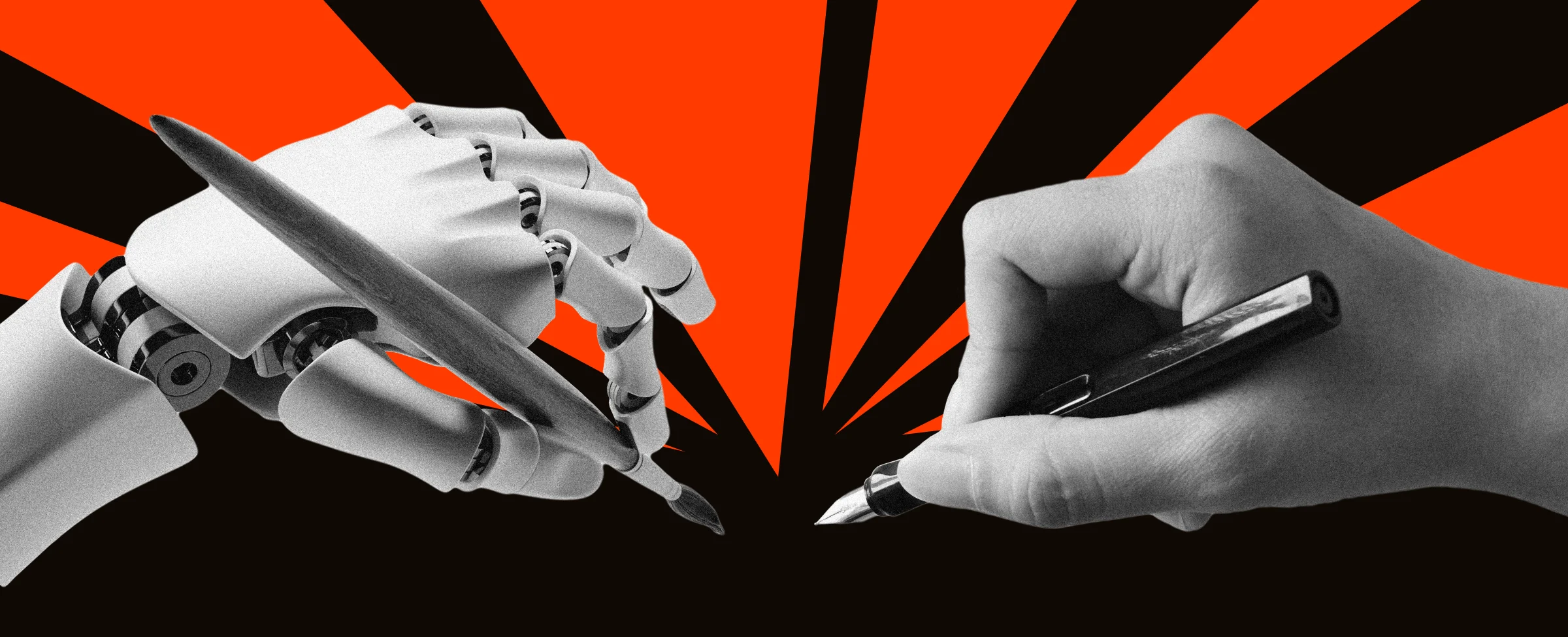
As AI tools become more deeply embedded in the design process, a new risk is emerging: visual homogenization. With widespread access to generative image models, algorithmic ideation, and prompt-based design platforms, visual identity is entering an era where individuality is harder to achieve, and easier to overlook.
This shift mirrors what happened during the Web 2.0 boom, when brands across industries embraced flat, minimal design systems built for screens and scalability. Logos became reduced to their simplest forms. Wordmarks leaned heavily on neutral sans-serifs. Typography favored geometry over expression. It was efficient. It scaled. It worked. But over time, the visual landscape began to blur, and everything started to feel the same.
The increasing ubiquity of AI may accelerate a similar pattern. As we continue to lean on this new technology to aid in the design process, it could lead to an aesthetic convergence, where countless identities emerge from the same toolkits, datasets, and prompt structures. In that kind of environment, a human perspective becomes an advantage. And rebellion becomes a strategic design decision.
The Efficiency Trap
AI is a powerful tool. It removes friction from early-stage ideation, speeds up exploration, and opens access to visual experimentation that once required significant time and skill. But most of these systems are trained on existing design work. Their outputs are based on aggregated aesthetics—what’s been done before, and what already exists.
When brands rely too heavily on AI-generated output, they risk building identities that feel templated, overfamiliar, and entirely forgettable. If the prompts are similar, the results will be too. Neutral type. Uninspired palettes. Expected compositions. The visual equivalent of tract housing.
The trap is in favoring speed over originality. The more design is optimized, the more likely it is to lose its edge.
Where Visual Identity Still Wins
Distinctiveness has always been a critical marker of strong identity. The rise of AI may make it even more valuable. As algorithmically-generated design becomes more commonplace, consumers are likely to become more attuned to what feels truly human: brands that show signs of human authorship, intent, and creative tension.
This could lead to a resurgence in more expressive and unconventional design moves. Unique textures or patterns. Unexpected color combinations. Type that feels idiosyncratic or deliberately imperfect. Unusual, hand-drawn illustration. Visual languages that don’t default to balance and symmetry, but lean into imperfection, disorganization, or eccentricity.
Design Beyond the Algorithm
- Build from strategy, not trends: Most importantly, visual identity should be grounded in strategic principles: positioning, audience, pain point solutions. Not conventional category mimicry.
- Use AI as a tool, not a factory: Generative tools can help expand a direction, but they can’t define it. Human judgment is needed to filter ideas into meaning.
- Avoid aesthetic autopilot: Resist falling back on familiar design conventions. Push the work to reflect tension, energy, or even contradiction.
- Design for emotion, not just function: Great identity work doesn’t just look good, it feels right. Cold, overproduced visuals rarely connect on that level.
- Make space for authorship: Wherever possible, let the work show its process. Brush marks, custom type quirks, analog textures. Signs of the maker still matter.
- Break the rules, on purpose: Get weird! Explore unconventional photography styles. Push layout structures past the grid. Combine colors you normally wouldn’t consider. The most interesting work often emerges from the edges, where established rules get challenged, ignored, or smashed.
Looking Ahead
Like with the advent of the printing press or modern computing, design will always evolve alongside its tools. AI is already reshaping how work gets made. But tools alone can’t create meaning. Meaning comes from intention. From storytelling. From creative choices made in service of something bigger than style.
The visual identities that endure will be the ones that resist easy replication. The ones that challenge the aesthetic defaults baked into our tools. The ones that feel like they were made by people who had something to say.
The future of identity isn’t artificial. It’s intentional.